How long can scorpions live in a house?
A scorpion in your home can survive longer than most people expect. While it’s easy to assume it’ll die off within days or weeks, many Southwest homes provide what a scorpion needs to persist for months — and sometimes years.
A climate-controlled house offers stable temperatures, hidden water sources, and a steady supply of prey insects. Compared to the harsher desert outside, indoor conditions can reduce environmental stress and extend a scorpion’s lifespan. That scorpion you saw last week could still be around for a while if conditions stay favorable.
What's the typical lifespan of an Arizona bark scorpion?
Arizona bark scorpions — the most common species found in Southwest homes — can live 5 to 7 years in the wild. Indoors, they can reach similar lifespans when conditions are favorable. Your home’s consistent temperature and humidity can create an environment that supports long-term survival.
Finding a scorpion today doesn’t tell you how long it’s been inside. A bark scorpion in your bathroom may have entered last night, or it could’ve been living behind your water heater for months. Without regular monitoring, there’s no reliable way to know whether you’re dealing with a new visitor or an established resident.
Does a scorpion usually stay in one room or move around?
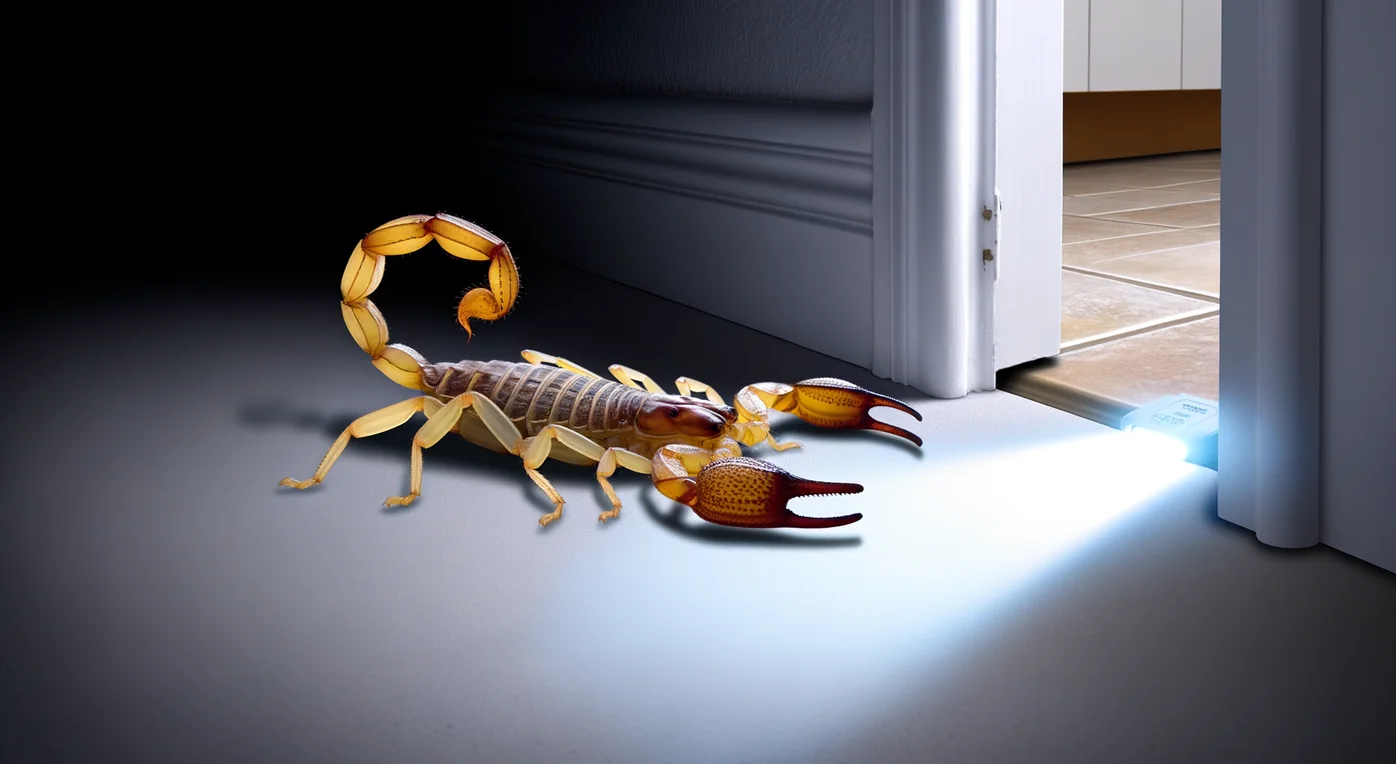
Scorpions don’t stay in one room. They’re nocturnal hunters that patrol after dark, following walls and baseboards as they search for prey. This behavior, called thigmotaxis, means they navigate by maintaining contact with surfaces — which is why you’ll often spot them along the edges of rooms rather than in open spaces.
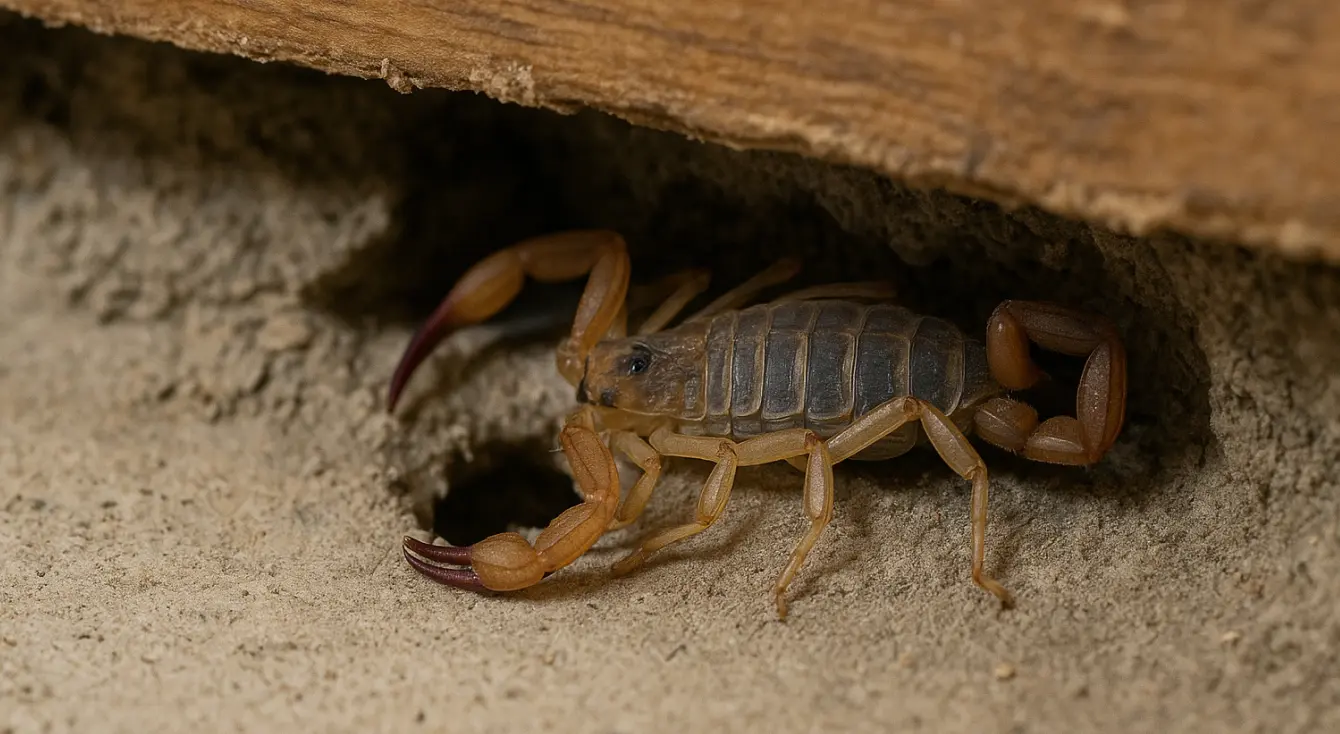
During the day, they’ll hunker down in dark, tight spaces: behind furniture, inside closets, or under bathroom cabinets. At night, they emerge and may travel considerable distances through your home. A scorpion that spent the day in your garage could end up in your bedroom by morning. If disturbed, or if a hiding spot becomes unsuitable, it’ll relocate to find better conditions elsewhere in the house.
What do scorpions need to survive indoors (and what does your home provide)?
Understanding what keeps scorpions alive indoors helps you identify — and eliminate — the conditions that turn your home into scorpion habitat. Many homeowners unintentionally provide everything on a scorpion’s survival checklist.
Do scorpions need a lot of food?
Scorpions are efficient predators that can get by on minimal food. They hunt crickets, roaches, spiders, and other small insects — pests that can already be present in and around a home. Even if you rarely see bugs, that doesn’t mean scorpions are going hungry. They’re patient hunters with very slow metabolisms.
A single cricket or cockroach can sustain a scorpion for weeks. So even very clean homes can support scorpions if occasional prey wanders in. Reducing insect populations helps, but a bug-free appearance doesn’t guarantee a scorpion-free home. These adaptable predators need surprisingly little to get by.
Where do scorpions get water inside a home?
Water is more critical than food for scorpion survival, and your home offers multiple sources you might not think about. Bathrooms provide the most obvious supply: condensation on pipes, slow drips under sinks, and moisture around tubs and showers. Kitchens offer similar opportunities with dishwasher leaks, refrigerator drip pans, and sink splash zones.
Less obvious water sources include laundry room humidity, pet water bowls, air conditioner condensation lines, and even moisture that collects on windows during temperature changes. A scorpion can survive on tiny droplets you’d never notice. Check these areas: under-sink cabinets, around toilet bases, near water heater connections, and anywhere pipes might sweat or drip.
What are the most common indoor hiding spots?
Scorpions seek out tight, protected spaces that mimic natural rock crevices and bark hideaways. They can squeeze into spots you wouldn’t think to check. Common hiding places include gaps along baseboards, spaces behind picture frames, and the dark recesses of closets where shoes and storage boxes create shelter.
Kitchen and bathroom cabinets offer ideal conditions — dark, undisturbed, and often near water sources. Scorpions also favor cluttered garages, wall voids accessed through outlet plates or switch boxes, spaces under furniture that rarely moves, and the folds of curtains or clothing left on floors. The more clutter and undisturbed space in your home, the more hiding options you’re providing.
How long can a scorpion live without food or water in your home?
Some homeowners hope that ignoring a scorpion will solve the problem — that it’ll die on its own. Unfortunately, scorpions are built for survival and can endure conditions that would kill many household pests.
How long can scorpions go without eating?
Scorpions can survive months without food thanks to their very slow metabolisms. Some species have been documented surviving up to a year without eating when temperatures are cooler and they’re less active. Your home’s moderate temperatures can help them conserve energy and extend these fasting periods.
This means occasional sightings months apart could be the same individual, not necessarily new invaders. A scorpion that entered your home in spring could still be alive in fall, even if it hasn’t found much prey. Their ability to essentially hibernate through lean times makes “wait it out” an unreliable approach.
How long can scorpions go without water?
Water deprivation kills scorpions faster than starvation, but “faster” is relative. Most scorpions die within 2–3 months without water access, though this varies by species and conditions. The problem is that many homes provide enough moisture to keep them hydrated for long periods.
Hidden water sources that can sustain scorpions include: condensation on cold water pipes, moisture in bathroom exhaust fans, water heater drip pans, washing machine drain areas, and humidity trapped in wall voids. Even small amounts of water that collect in sink traps or shower drains can be enough. Eliminating these sources takes vigilance and often goes beyond simple surface cleaning.
Will air conditioning or indoor temperature affect survival?
Your home’s climate control can work in scorpions’ favor. While extreme heat or cold can kill scorpions in the wild, a steady 68–78°F indoor temperature can support long-term survival. This stable environment reduces their metabolic needs and can extend how long they can go without food.
Air conditioning doesn’t necessarily harm scorpions — moderate temperatures can help them conserve energy and remain inactive for longer stretches. Unlike outdoors, where seasonal extremes can create natural die-offs, a climate-controlled home can support scorpions living as solitary residents for years if water, shelter, and occasional prey are available.
Can scorpions breed inside your home?
One scorpion is a concern. A breeding population is a bigger problem. Understanding reproductive potential can help you gauge whether you’re dealing with a random visitor or something more established.
How many babies can a scorpion have?
A single female Arizona bark scorpion typically gives birth to 25–35 young, though some broods can reach 40 or more. These babies are born live and immediately climb onto their mother’s back, where they’ll ride for several weeks. In practical terms, one pregnant female can turn a minor issue into a much larger one within months.
Young scorpions reach maturity in 3–4 years, but they can survive on their own after their first molt. If a female gives birth in your home, you could have dozens of juvenile scorpions dispersing through walls and floors within weeks.
Do scorpions build nests indoors?
Scorpions don’t construct nests like ants or termites, but they do establish territories in favorable locations. Mother scorpions with babies will seek out especially protected spots — deep in closets, behind water heaters, or in garage storage areas where they won’t be disturbed.
While you won’t find a traditional “nest,” you may find multiple scorpions using the same general area if conditions are ideal. Cluttered storage rooms, undisturbed garage corners, and spaces near consistent moisture can become congregation points. These aren’t social gatherings — scorpions simply gravitate to the same optimal conditions.
When should you assume there may be more than one?
Certain signs suggest you’re dealing with multiple scorpions rather than a lone wanderer. Take action if you notice: repeated sightings within a few weeks, scorpions in different rooms or levels of your home, a sighting near water sources like bathrooms or laundry rooms, or finding juvenile scorpions (smaller, lighter-colored versions).
Finding a scorpion with babies on its back confirms breeding activity. Multiple sightings along the same wall or in the same room can suggest an entry point or especially favorable conditions in that area. For deeper analysis of whether one scorpion means you have an infestation, patterns matter more than individual sightings.
How can you tell if scorpions are still in your home—and what should you do next?
Confirming ongoing scorpion activity takes strategic observation and the right tools. Once you know what you’re dealing with, you can take targeted action rather than hoping the problem resolves itself.
What are the most common signs scorpions are still around?
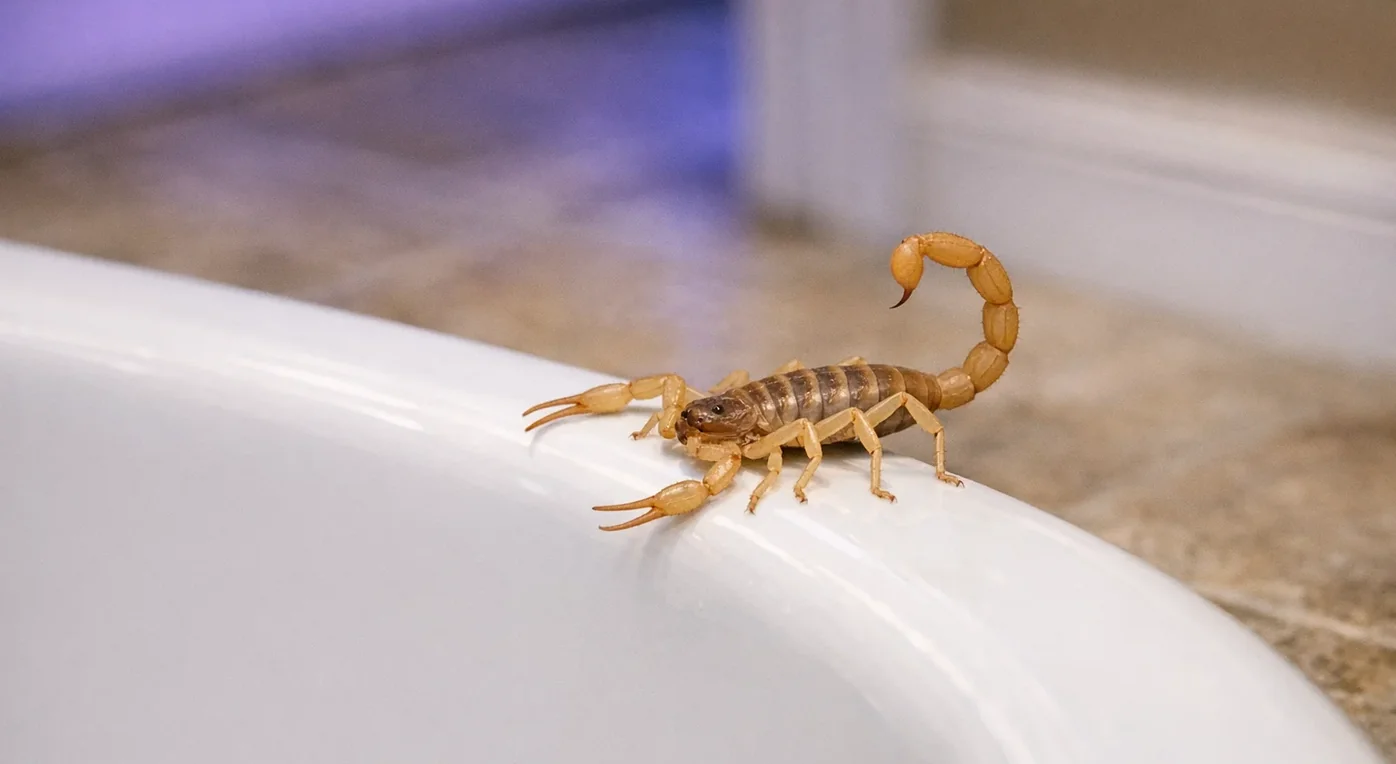
Active scorpion populations can leave subtle clues. Watch for scorpions in sinks, tubs, or shoes — they can fall into these smooth-sided areas while hunting and may not be able to climb out. Pets often notice scorpions before you do; if your dog or cat fixates on baseboards or seems unusually focused on certain areas at night, investigate carefully.
Multiple sightings within a short timeframe often indicate ongoing activity. Pay special attention to sightings along walls or baseboards at night — this matches their typical perimeter-travel behavior. Scorpions climbing walls or appearing on ceilings suggests they’re actively moving through your home’s vertical spaces as well.
What's the safest way to check for scorpions at night?
Scorpions glow bright green under ultraviolet light, which makes nighttime detection possible. Wait until it’s fully dark, then use a UV flashlight to scan along baseboards, walls, and corners where scorpions typically travel. Check bathrooms, laundry rooms, and areas near exterior walls first.
Move slowly and systematically. Scorpions often freeze when illuminated, giving you time to spot their distinctive glow. Focus on edges and transitions: where walls meet floors, around door frames, and along the backs of toilets. Keep a clear jar and stiff paper handy for safer capture and removal. This method can work, but it takes consistency — you’d need to patrol regularly to catch scorpions as they emerge.
How can you monitor scorpion activity without staying up all night?
Manual UV flashlight patrols can work, but they aren’t practical long-term. This is where automated detection can help. Since scorpions naturally glow under UV light and tend to travel along room perimeters, detection systems like Scorpion Alert use these behaviors to monitor continuously. Detectors plug into wall outlets — right where scorpions naturally travel — and watch for that distinctive green glow.
These systems scan when rooms are dark (when scorpions are active) and can alert you immediately via smartphone. Instead of nightly patrols, you get real-time notifications that help you identify patterns: which rooms see activity, what times scorpions appear, and whether prevention efforts are working. Continuous monitoring can reveal activity you’d likely miss with sporadic manual checks.
What should you do after you confirm activity?
Once you’ve confirmed scorpions are present, follow this action plan:
1. Reduce water sources immediately. Fix leaks, eliminate standing water, and improve ventilation in humid areas. Deep cleaning moisture-prone areas helps make your home less hospitable.
2. Control insect prey. Address cricket, roach, and spider populations that sustain scorpions. Focus on the insects’ needs too — they’re often drawn to the same moisture and shelter.
3. Eliminate hiding spots. Declutter storage areas, seal gaps along baseboards, and organize closets to reduce protected spaces. The fewer places scorpions can hide, the less likely they are to settle in.
4. Seal entry points. Check weatherstripping, door sweeps, and potential plumbing entry routes. Even small gaps matter — scorpions can compress their bodies significantly.
5. Monitor consistently. Whether through technology or regular checks, maintain awareness of scorpion activity. Sticky traps provide some information but often miss scorpions that travel along walls above them. Sprays have limited effectiveness and typically require direct contact. Detection systems can complement these methods by providing continuous monitoring without constant effort.
Scorpions can survive in a home for years if conditions remain favorable. Acting early can help prevent a single sighting from turning into an established problem.
If scorpions can survive indoors for long stretches when conditions are right, the best next step is to reduce their hiding spots and stay aware of nighttime activity—the time you’re most likely to spot them. For a practical way to keep tabs on what’s happening in and around your home, explore Scorpion Alert to help you monitor risk and respond sooner.