What are the most common scorpions in Austin, Texas?
If you've spotted a scorpion in your Austin home, you're not alone. Central Texas hosts several scorpion species, but here's what matters: the striped bark scorpion is by far the most likely culprit when you find one indoors. Your specific neighborhood plays a role too—homes near greenbelts see more activity than those in established subdivisions, and rocky lots attract different species than manicured lawns.
Where you spot the scorpion can tell you a lot. Finding one repeatedly along your baseboards or in the garage? That's probably a striped bark scorpion establishing a pattern. Discovering one under landscape timbers in your yard? It could be a different species that prefers outdoor habitats.
Striped bark scorpion (the one most Austin homeowners encounter)
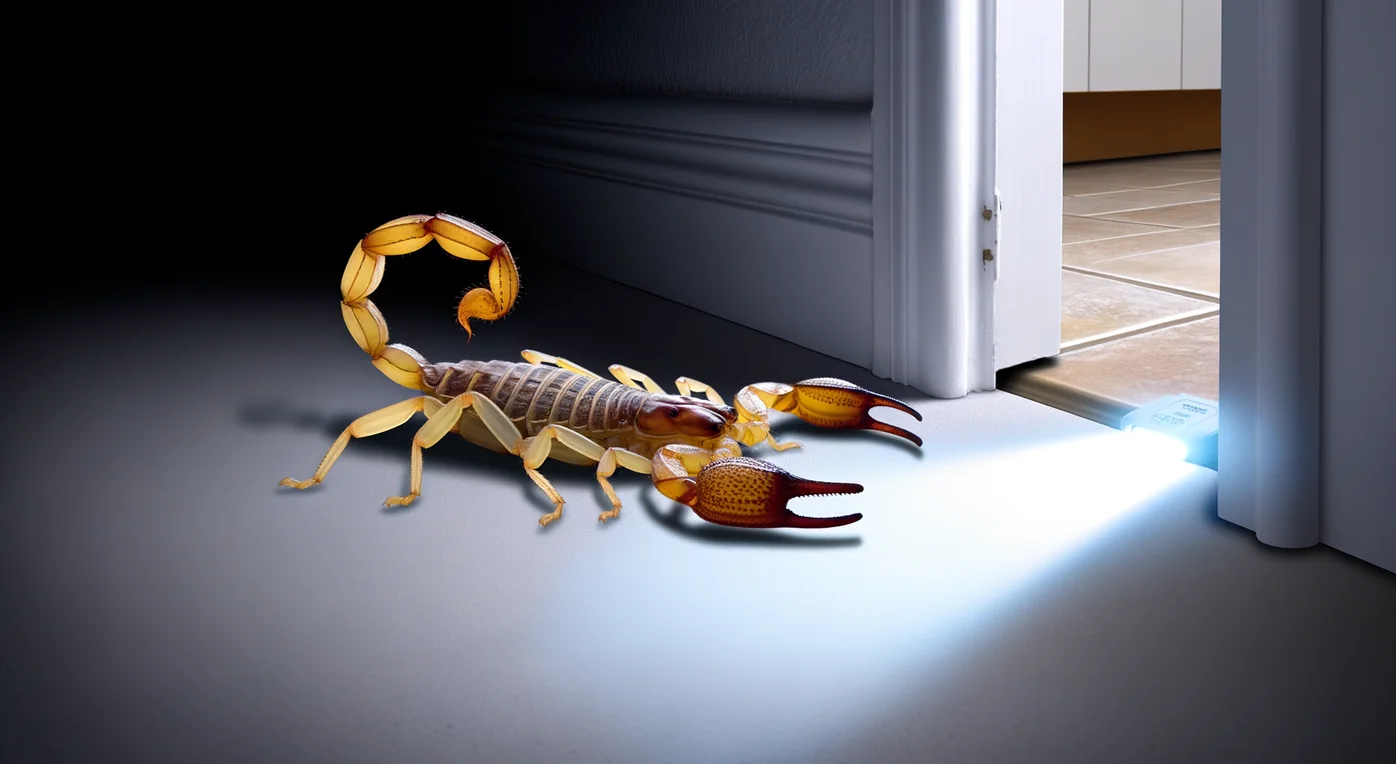
The striped bark scorpion looks exactly like it sounds—tan to light brown with two darker stripes running down its back. Picture a slender build, about 2–3 inches long, with relatively thin pincers compared to bulkier scorpion species. These are the ones that show up in your garage, along bathroom walls, and in those cardboard boxes you've been meaning to sort through.
Here's why you keep finding them in the same spots: bark scorpions are edge travelers. They don't scurry across open floors like spiders. Instead, they hug walls and baseboards, following the room's perimeter. That's why you'll spot them where the wall meets the floor, tucked behind the toilet, or creeping along the garage door threshold at night.
Other Central Texas scorpions you might see outdoors
Austin's outdoor spaces host additional native species that rarely venture inside. The Texas cave scorpion prefers rocky outcrops and limestone formations. You might find one when moving landscaping stones or cleaning out woodpiles, but they're not the repeat offenders showing up in your bathroom every few weeks.
Don't stress about perfect identification for every scorpion you see outdoors. Focus on which ones actually pose a recurring indoor threat—and in Austin, that's overwhelmingly the striped bark scorpion. The others tend to stay where they belong: under rocks, in leaf litter, and beneath fallen logs.
Do scorpions in Austin glow under a blacklight?
Yes, every scorpion species in Austin glows under UV light—it's one of nature's stranger phenomena. Shine a blacklight on a scorpion and it fluoresces with an eerie blue-green glow. The effect is strongest with 365nm UV wavelengths, which produce a bright, unmistakable fluorescence even from several feet away.
This UV reaction happens because scorpions have fluorescent compounds in their exoskeleton. It's why blacklight inspections work so well at night, and why automated detection systems like Scorpion Alert use 365nm UV to spot them automatically. The glow is hard to miss in a dark room.
How can I tell if it's a striped bark scorpion?
You don't need to get close for a positive ID. From a safe distance (or from a photo on your phone), you can check a few key features that distinguish striped bark scorpions from other species. Keep in mind that lighting and viewing angle can change how colors appear, so look for multiple traits rather than relying on just one.
Quick visual checklist: stripes, size, pincers, tail
Start with the stripes—two darker bands running lengthwise down the back, though these can be faint on some individuals. Check the overall build: striped bark scorpions have a slender profile with relatively thin pincers, not the thick, lobster-like claws of some desert species. The tail is slim and often held curved over the back when the scorpion feels threatened.
Size varies more than you'd think. Adults reach 2–3 inches, but juveniles can be tiny—under an inch—and they still pack a sting. Don't assume a small scorpion is harmless. Young bark scorpions often appear lighter in color, almost translucent, but they share the same body proportions as adults.
Where you found it matters (indoors vs. under rocks)
Location provides big clues about species. Finding scorpions repeatedly along your baseboards, near door thresholds, or traveling along walls? That's classic striped bark scorpion behavior. They're following edges because of thigmotaxis—their natural tendency to maintain contact with surfaces while moving.
Contrast that with finding a scorpion under a decorative boulder or inside a pile of firewood. Those outdoor encounters often involve different species that rarely establish indoor populations. If you're seeing the same travel patterns along your home's perimeter week after week, you're dealing with bark scorpions exploiting predictable routes.
Common lookalikes that cause false alarms
Not every creepy-crawly is a scorpion. Earwigs cause plenty of false alarms with their rear pincers, especially when spotted quickly in low light. Jerusalem crickets (potato bugs) have a similar color and can trigger that same “what is THAT?” response. Even large wolf spiders get mistaken for scorpions when they're moving fast along a baseboard.
Shadows create confusion too. A piece of pet kibble or a small toy can look remarkably scorpion-like when backlit at night. Before panicking, grab your phone and snap a clear photo with the flash on. If it's actually a scorpion, you'll see the segmented tail and pincers clearly. If not, you've saved yourself some stress.
Are scorpions in Austin dangerous, and how worried should I be?
Let's address the fear head-on: most scorpion stings in Austin are intensely painful but not life-threatening for healthy adults. Think of it like a very angry wasp sting that keeps burning. However, children, older adults, and people with compromised immune systems face higher risks and need extra vigilance.
The key is knowing what's normal versus what needs medical attention. Most sting victims experience localized symptoms that, while unpleasant, resolve without serious complications. But certain reactions signal the need for immediate medical care.
What a typical sting feels like (and what's not typical)
A typical striped bark scorpion sting hits you with immediate, sharp pain—like stepping on a hot nail. The area burns and tingles, often going numb for a while. You might see localized swelling and redness around the sting site. These symptoms usually peak within an hour and gradually improve over 24–48 hours.
Red flags that mean “call for help now” include trouble breathing, widespread hives or rash, uncontrolled muscle twitching, excessive drooling, or severe vomiting. Vision problems, tongue swelling, or feeling like your throat is closing also warrant immediate medical attention. When in doubt, call poison control at 1-800-222-1222 for guidance.
What if my child or pet is stung?
Children face higher risks because venom affects their smaller bodies more intensely. Watch for excessive restlessness, unusual eye movements, or difficulty swallowing—symptoms that might not appear in adult stings. Some children experience “roving eyes” where their eye movements become erratic and uncontrolled.
Pets, especially small dogs and cats, can have severe reactions too. Look for excessive drooling, tremors, difficulty walking, or changes in breathing. For detailed guidance on protecting children from scorpion encounters, check out our article on why children face greater risks from scorpion stings.
Why 'small scorpion = more dangerous' isn't a reliable rule
You've probably heard that baby scorpions are more dangerous because they “can't control their venom.” This oversimplifies a complex issue. While juvenile scorpions do sting, the danger depends more on the species and your individual sensitivity than the scorpion's size.
What matters most is avoiding a sting in the first place—which is why detection and prevention beat trying to judge danger by size. For a deeper dive into the relationship between scorpion size and sting severity, see our post about what scorpion size really tells you about sting risk.
Why am I suddenly seeing scorpions in my Austin home?
Scorpion sightings can spike suddenly, leaving homeowners wondering what changed. In Austin, specific triggers drive these unwelcome visits: weather patterns, construction, and shifts in the surrounding habitat. Understanding why they're showing up now helps you respond effectively this week—not just hope they go away.
Weather and habitat triggers in Central Texas
Austin's weather swings can create perfect scorpion storms. Those 95-degree days followed by evening thunderstorms? Scorpions get active. During droughts, they seek moisture wherever they can find it—your AC condensation line, the bathroom, that dripping faucet in the laundry room. They're not just randomly wandering; they're following water.
Heavy rains create different problems. Water floods their outdoor hiding spots, forcing scorpions to seek higher, drier ground—like your home. Plus, rain brings out insects, and where prey goes, predators follow. Notice more crickets and roaches after storms? Scorpions notice too.
New builds, renovations, and rocky landscaping
Construction disturbs established scorpion populations. That new development going up nearby? It's displacing scorpions from their longtime homes. Your own landscaping project might have similar effects—moving rocks, installing retaining walls, or even just storing construction materials can create temporary scorpion highways.
Quick fixes that actually work: store materials in sealed containers, not loose piles. Keep boxes and equipment at least a few inches off garage floors. Clear a 2-foot “dead zone” around your foundation where nothing touches both the ground and your home's walls. These simple changes can disrupt travel routes immediately.
When a 'random one' is a sign of a repeat problem
One scorpion might be random. Three scorpions along the same wall over two weeks? That's a pattern. Start tracking each sighting: exact location, time of day, which direction it was traveling. You'll often discover they're using the same baseboard highway or entering through the same gap.
Repeated perimeter sightings reveal predictable routes that are perfect for targeted monitoring. If you keep finding them along the master bathroom wall at 11 PM, that's not coincidence—it's valuable intelligence about where to focus your prevention efforts. Understanding what attracts scorpions to specific areas helps you break the pattern.
How can I confirm where scorpions are active in my house (without staying up all night)?
Before you seal every crack or call an exterminator, you need intel. Where exactly are scorpions traveling in your home? Random prevention wastes time and money. Smart monitoring reveals their actual routes, so you can target efforts where they'll matter most.
Option 1: Manual night checks (what to do safely and consistently)
Manual UV sweeps work, but they're tedious. Wait until full darkness (scorpions are most active between 10 PM and 2 AM). Wear closed-toe shoes and use a 365–395nm UV flashlight—the scorpions will glow bright green. Focus on baseboards, corners, behind toilets, and anywhere walls meet floors. Check garage door thresholds and utility rooms too.
Safety first: never reach into dark spaces. Use tongs or a stick to move items. Have a capture kit ready (clear container and stiff cardboard). The problem? You'd need to do this every single night to catch sporadic activity. Miss one night and you miss useful data about their patterns.
Option 2: Perimeter monitoring that runs automatically
This is where technology helps. Scorpion Alert Detectors leverage two key scorpion behaviors: their edge-following movement (thigmotaxis) and their UV fluorescence. Each detector plugs into a standard outlet, shining 365nm UV light onto the floor below—right where scorpions naturally travel.
The system activates only when rooms darken, matching scorpions' nocturnal schedule. Every 500 milliseconds, it captures an image and analyzes it for that telltale green glow. When it spots a scorpion, you get a photo-verified alert with an AI confidence score pushed to your phone. No false alarms from dust or shadows—just real scorpion detections when they matter.
Where should I place monitors in an Austin home?
Start with transition zones and high-concern areas. Place detectors near exterior door thresholds, in bedrooms (especially children's rooms), and along garage-to-house entries. Add coverage in moisture-rich areas where scorpions hunt: bathrooms, laundry rooms, under kitchen sinks.
The beauty of plug-in placement is that outlets naturally sit on room perimeters where scorpions travel. You're monitoring the exact paths they use, not random floor space they'll never cross. For homes with known entry points (check our guide on how scorpions enter homes), position detectors downstream from these areas to catch them after entry.
What should I do when I get a confirmed detection?
Stay calm—rushing leads to lost scorpions. When your phone alerts, note which detector triggered and head there with your UV flashlight and capture tools. The scorpion is likely still nearby, following the wall edge. Use the photo from the alert to know exactly what you're looking for.
Capture method: place a clear glass or plastic container over the scorpion, slide cardboard underneath, flip the container, and secure the lid. Release it far from your home or call a professional removal service. The photo evidence helps if you need to show pest control exactly what you're dealing with. Family members can all receive alerts, so everyone stays coordinated and safe.
Why relying on sticky traps alone can be frustrating
Sticky traps seem like an easy solution, but they're deeply flawed for scorpion monitoring. Dust and debris quickly coat the adhesive, reducing effectiveness within days. They become insect buffets, attracting prey that then attracts scorpions to the edges—where they can often grab a meal without getting stuck.
Worse, sticky traps with struggling insects or dead scorpions can be nightmare fuel for kids and upsetting for pets who might step on them. They work as a backup in specific spots (under appliances, behind water heaters) but can't match the coverage and reliability of active monitoring. Use them to supplement, not replace, a comprehensive detection strategy.
Now that you know the Striped Bark Scorpion is the most common visitor around Austin—and that they’re most active at night and love tight, sheltered hiding spots—the next step is spotting activity early before it becomes a pattern. If you want a simple way to keep tabs on where scorpions are showing up around your home, Scorpion Alert can help you detect and track sightings so you can respond with confidence.