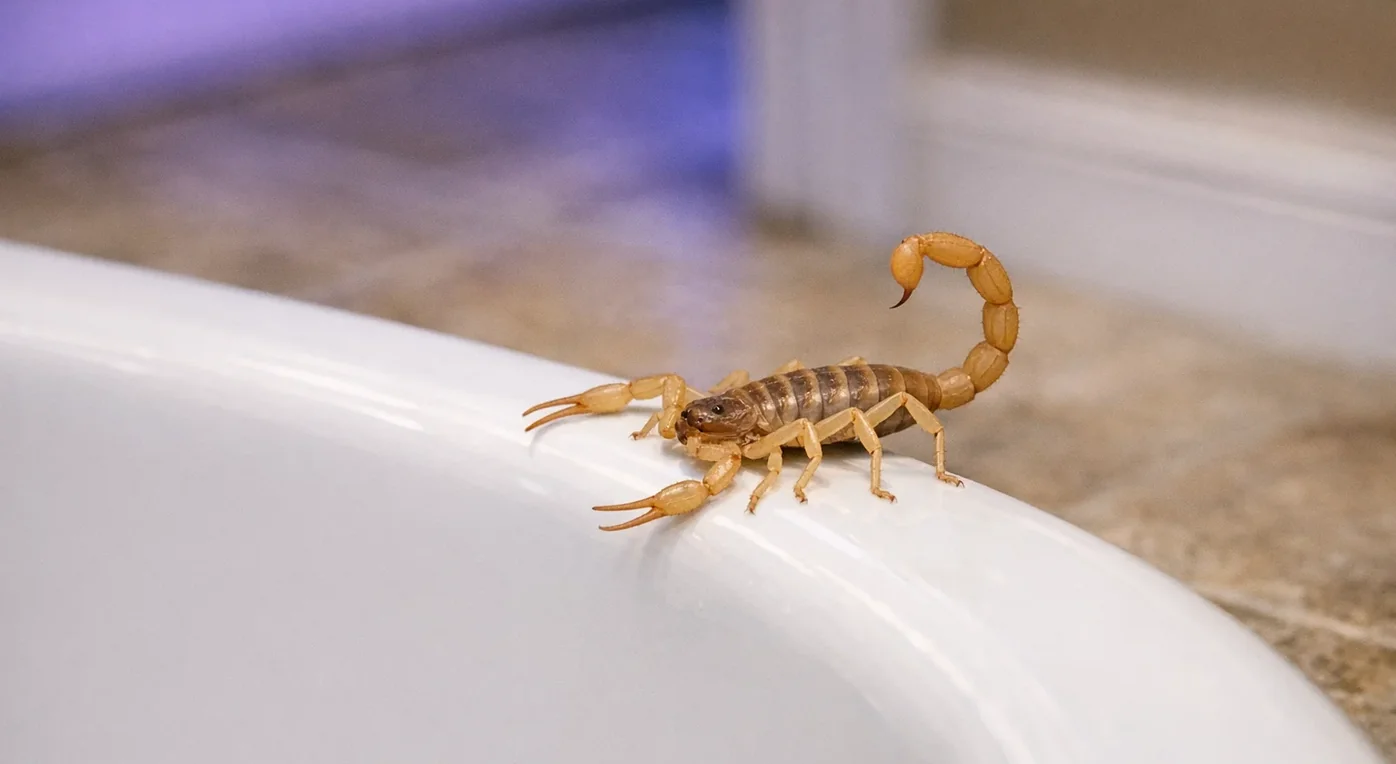
You're wiping down the kitchen counter when movement catches your eye. A scorpion scurries along the baseboard, disappearing behind the trash can.
This scene plays out nightly across Arizona, Texas, and the Southwest. But here's what most homeowners don't realize: that scorpion didn't wander in randomly. It came for the buffet you're unknowingly providing.
The Hidden Food Chain in Your Home
That cracker crumb under your toaster feeds ants. Those ants feed spiders. And spiders? They're a scorpion's favorite midnight snack.
Striped bark scorpions can survive months without eating. But why would they when your home offers reliable hunting? Every skipped sweep creates another link in this food chain. Breaking it doesn't require obsessive cleaning — it requires strategic cleaning.
The difference matters when you're dealing with creatures that navigate by touch and vibration, not sight.
Where Scorpions Actually Hunt
Forget dark corners. Scorpions hunt where their prey lives.
Behind your toilet. That gap between porcelain and wall creates a scorpion highway. Condensation attracts silverfish and crickets. The scorpion follows. A 30-second vacuum pass weekly disrupts this route.
Under kitchen appliances. Pull out your refrigerator. Those crumbs mixed with dust? That's ant paradise. The motor's warmth creates perfect insect conditions. Arizona bark scorpions patrol these spaces nightly. Monthly cleaning here prevents major problems.
The washing machine zone. Lint plus moisture equals cricket heaven. Add dryer warmth, and you've built ideal hunting grounds. Keep floors clear — scorpions hide in laundry piles more than you'd think.
Night Cleaning: The Danger Zone
Most stings happen between 8 p.m. and midnight — exactly when we tackle chores.
Picture this: You reach under the bathroom sink for supplies. Your hand brushes something that moves. By the time your brain registers danger, you've been stung. This happens hundreds of times each summer across the Southwest.
The fix is simple. Carry a UV flashlight after dark. Scorpions glow green under ultraviolet light — you'll spot them from six feet away. Check before reaching. Look before moving furniture. Five seconds prevents most cleaning stings.
The Moisture Magnet
Desert water is scarce, but your bathroom has plenty. Where there's water, there are bugs.
Fix that dripping shower head. Squeegee post-shower puddles. Leave washing machine doors open between loads. Each water source feeds an ecosystem of scorpion prey.
Phoenix faces unique challenges with evaporative coolers. These units create damp wall spots — perfect for breeding the insects scorpions hunt. Regular maintenance during cooling season becomes critical.
Storage That Works
Your garage contains dozens of scorpion apartments. They're called cardboard boxes.
Scorpions grip cardboard easily but slip off smooth plastic. This fact should drive every storage decision. Transfer holiday decorations to sealed plastic bins. Move camping gear from canvas to containers with tight lids.
Keep everything six inches off floors and away from walls. This breaks the continuous surfaces scorpions use for navigation. Wear gloves when retrieving items. Shake things out before bringing them inside.
The Pet Food Problem
Dog food draws roaches. Roaches draw scorpions. It's that simple.
Feed pets on schedules. Pick up bowls within 30 minutes. Sweep every dropped kibble — crumbs matter. Store food in sealed containers, never paper bags. Double your vigilance for garage feeding — garages already have more entry points than any room.
Building Sustainable Habits
Complex cleaning plans fail. Start simple.
Nightly: Kitchen wipe-down, pet bowls up, crumbs swept. Two minutes total.
Weekly: Vacuum bathroom and bedroom baseboards. Check under sinks. Clear clutter. Fifteen minutes per room.
Monthly: Pull out one appliance. Clean behind and underneath. Rotate through your home. Twenty minutes beats quarterly marathons.
Set reminders. Make it routine. Consistency trumps perfection.
When Clean Isn't Enough
Smart cleaning dramatically reduces encounters. But in Arizona and Texas, where bark scorpions are ecosystem fixtures, cleaning alone might not suffice.
Technology fills this gap. While you maintain a clean home, automated detection systems like Scorpion Alert monitor perimeters 24/7. UV detectors along walls watch for that telltale glow, alerting your phone instantly. It's like having a tireless sentry.
Many homeowners combine approaches — strategic cleaning plus detection for peace of mind. Finding one scorpion doesn't mean infestation, but it means evaluating your strategy.
Coexisting in the Desert
Living in scorpion territory doesn't mean living in fear. It means adapting to creatures that've called this land home for millions of years.
Your cleaning routine becomes first defense. Not because scorpions like dirt — they don't. But their prey does. Remove prey, and scorpions hunt elsewhere. Add sealing, moisture control, and maybe detection technology for comprehensive protection.
The scorpion you prevent is the one you'll never trap under a glass at 2 a.m. That's worth celebrating.
Good cleaning habits provide the foundation, but during peak season you might want extra reassurance. Scorpion Alert adds that final protection layer, watching walls while you sleep and alerting you instantly if anything slips through.
Staying on top of clutter, vacuuming regularly, and sealing tiny gaps takes away the dark, undisturbed spots scorpions love—and makes it easier to notice activity early. If you want extra peace of mind between cleanings, Scorpion Alert can help you monitor for scorpion movement so you know when to tighten up your routine and focus your prevention efforts.