You wake up to a faint scratching sound coming from your ceiling. Could a scorpion really be crawling through your AC vents? The short answer is yes — but it's not as common as you might fear.
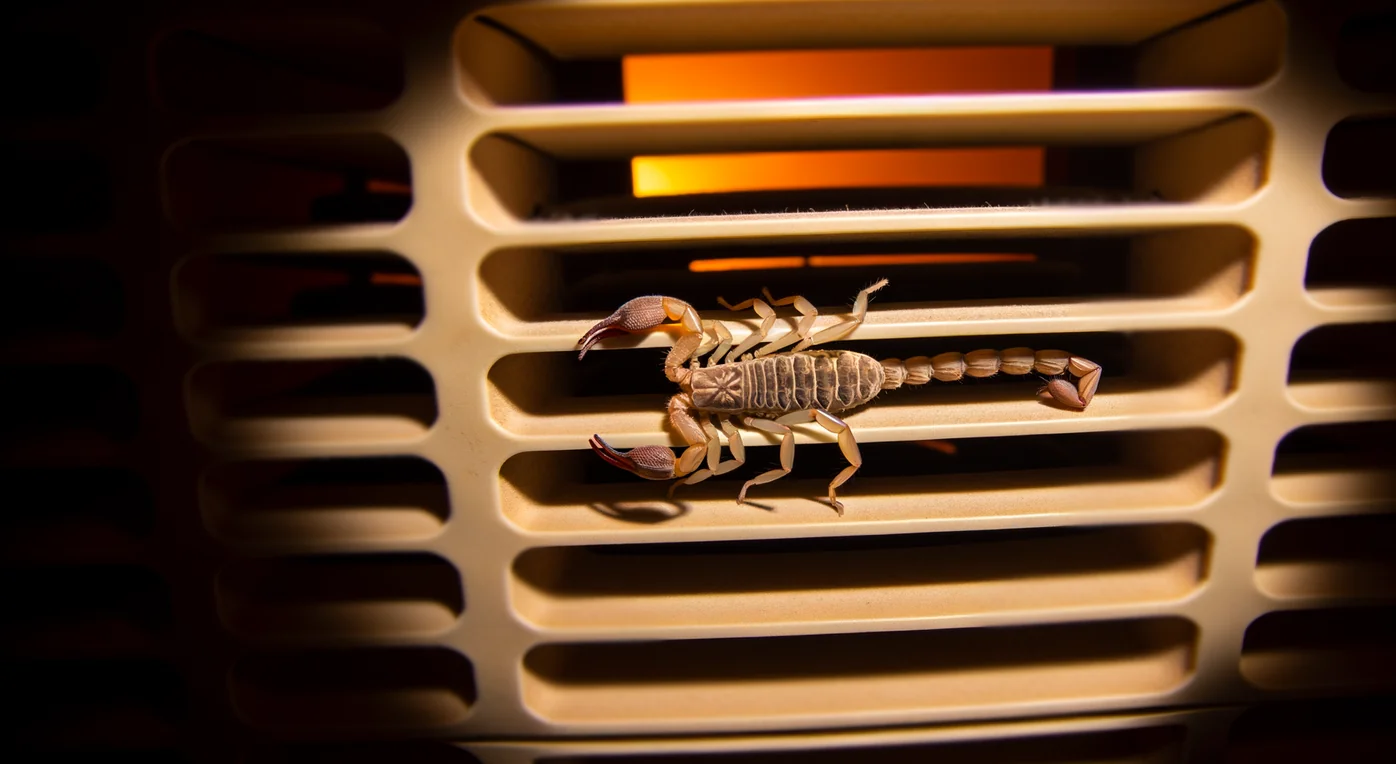
AC vents create a highway system throughout your home. These metal pathways connect every room, and scorpions are excellent climbers with strong pincers that can grip smooth surfaces. In Nevada and Arizona, where summer temperatures push scorpions to seek cool shelter, your air conditioning system becomes an attractive entry point.
How Scorpions Navigate Your HVAC System
Scorpions don't randomly wander into AC vents. They follow specific patterns based on their natural behavior. These arachnids are thigmotactic, meaning they navigate by maintaining contact with surfaces. Your ductwork provides exactly what they're looking for — enclosed pathways with continuous surfaces to follow.
The journey typically starts outside. A scorpion finds a gap around your outdoor AC unit or crawls through unsealed penetrations where refrigerant lines enter your home. Once inside the system, they move through the ducts following air currents and temperature gradients. Cool air flowing through the vents signals a potential water source or prey location.
Most scorpions enter through return air vents rather than supply vents. Return vents pull air into the system, creating a slight vacuum that can actually help draw small creatures inside. Supply vents push air out, making entry more difficult — though not impossible for a determined scorpion.
Warning Signs of Scorpions in Your Vents
Picture this scenario: You're adjusting your ceiling vent when you notice dark debris around the edges. That's often the first sign. Scorpions leave behind small droppings and shed exoskeleton fragments as they move through ductwork.
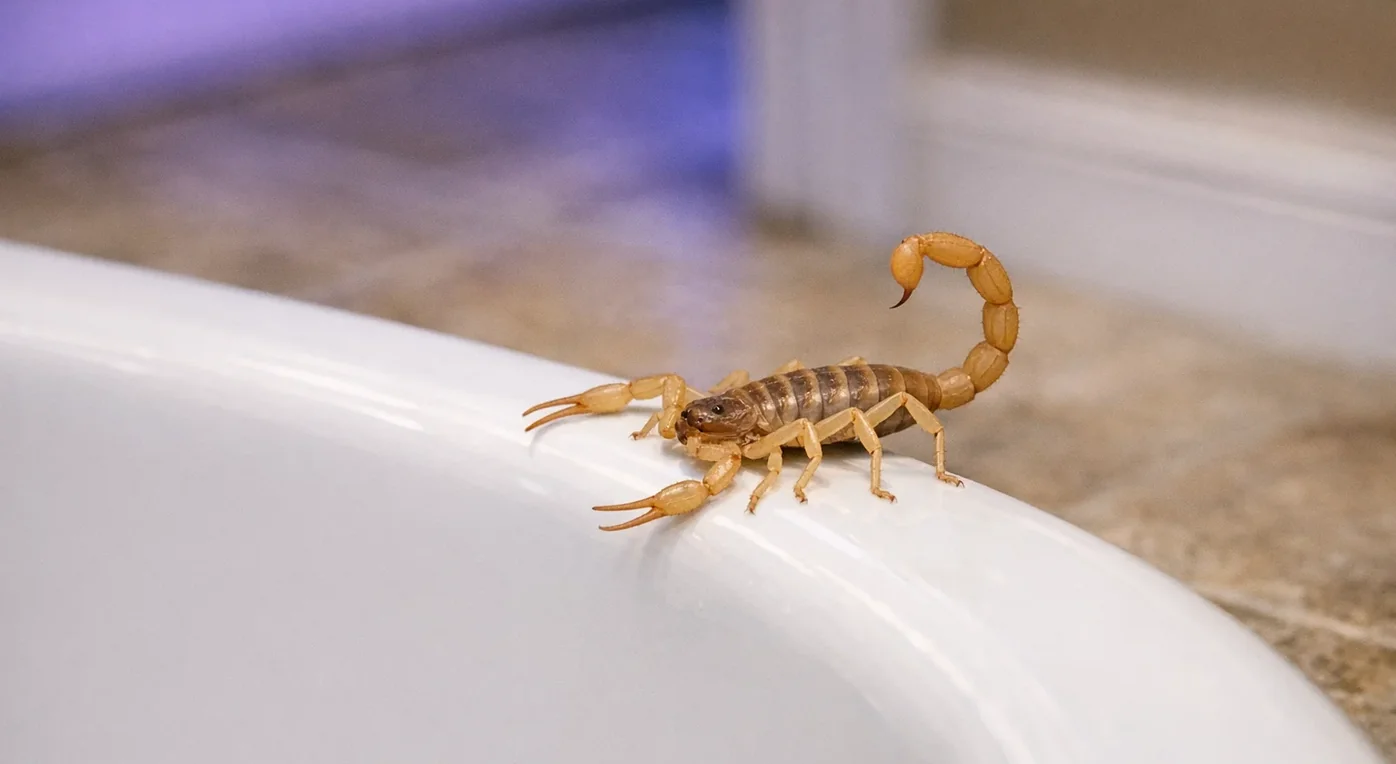
Other warning signs include finding dead insects near vents (scorpions hunt at night and may drop prey remains) or actually spotting a scorpion emerging from a vent opening. In Austin, Texas, homeowners report finding striped bark scorpions near bathroom vents where humidity attracts their prey. The same pattern occurs with Nevada scorpions seeking moisture in desert homes.
Here's what many homeowners don't realize: if you find one scorpion, there could be more. Scorpions often follow pheromone trails left by other scorpions, especially during mating season. Your ductwork can harbor multiple scorpions without you knowing it.
Why Standard Prevention Methods Fall Short
Glue traps placed near vents catch some scorpions but miss many others. These creatures can navigate around obstacles, and their strong pincers sometimes pull them free from adhesive surfaces. Plus, you'd need traps at every vent opening — an expensive and unsightly solution.
Professional duct cleaning helps but doesn't prevent re-entry. Scorpions can return within days of a cleaning if entry points remain unsealed. Pesticide treatments inside ductwork pose health risks and often prove ineffective since scorpions can survive extended periods without breathing normally.
The real challenge? Scorpions are nocturnal. They move through your vents while you sleep, emerging to hunt when rooms are dark. By morning, they've retreated back into the ductwork or found hiding spots along your baseboards. Manual inspection with a UV flashlight might reveal their glowing bodies, but you'd have to check every vent every night.
Effective Solutions for Vent-Invading Scorpions
Start with the source. Inspect your outdoor AC unit for gaps larger than 1/16 inch — that's all a young scorpion needs. Seal penetrations with steel wool and caulk, paying special attention to where refrigerant lines enter your home. Install fine mesh screens over exterior vent openings.
Inside, consider vent filters designed for pest exclusion. These slip behind standard vent covers and block scorpions while allowing airflow. Replace them seasonally as dust accumulation reduces effectiveness.
For comprehensive protection, combine physical barriers with detection. Scorpions that enter through vents eventually come down to hunt, typically traveling along walls where automated detection systems like Scorpion Alert can spot them. This approach catches scorpions regardless of their entry point — through vents, door gaps, or plumbing penetrations.
Professional scorpion sealing services offer the most thorough solution. Technicians identify and seal potential entry points throughout your HVAC system and home exterior. While more expensive upfront, proper sealing provides long-term protection that sticky traps and sprays can't match.
The Bottom Line on AC Vent Invasions
Yes, scorpions can and do enter homes through AC vents. But understanding their behavior helps you respond appropriately. They're not lurking in every duct — they're following predictable patterns seeking food, water, and shelter.
Focus your efforts on sealing exterior access points and monitoring interior spaces where scorpions actually hunt. Whether you're dealing with common scorpions in Austin, Texas, or the more dangerous bark scorpions in Nevada, the best way to keep scorpions out of your house combines multiple strategies. Don't let fear of vent invasions keep you up at night — take practical steps to secure your home and sleep soundly.
Protect your home with Scorpion Alert. Our automated detectors watch for scorpions 24/7, sending instant alerts to your phone when one appears. No more nightly patrols or surprise encounters — just reliable protection for $5/month. Get your Scorpion Alert system today.
If you’re worried about scorpions getting in through AC vents, the biggest takeaway is that small gaps around registers, ductwork, and nearby penetrations can become a real pathway—so sealing and regular checks matter. For an extra layer of confidence, Scorpion Alert can help you spot activity early and keep tabs on the areas where scorpions are most likely to travel after they get inside.